This is the second annual report by OECD WATCH, which reviews the performance of the National Contact Points for the OECD Guidelines (NCPs). It covers the period June 2003 – June 2004. The NGO reports indicate that some excellent promotional work is going on and that some NCPs have made outstanding efforts through innovative websites to highlight the work on the Guidelines. A few NCPs should also be commended for engaging in regular dialogue with all stakeholders about the ethical dilemmas that confront responsible companies in the globalised economy. Task forces, working groups or other advisory bodies tend to improve the work of the NCP. But these positive aspects are offset by the increasing use of procedural devices by some NCPs to disallow complaints
read more lessrelated content
Voices and SIRGE Coalition’s Handbook for Filing NCP Complaints Against Harmful Business Practices
Cleaning up the damage to the CSDDD from the Omnibus 1
The European Parliament has today approved the Omnibus I package that significantly weakens the landmark Corporate Sustainability Due Diligence Directive (CSDDD), among other accountability laws. OECD Watch calls on EU Member States to correct the…
OECD Watch joins letter urging reform in Thailand through its OECD accession bid
In 2024, Thailand was invited to the begin the lengthy process to join the OECD as a member state. On 8 December 2025, OECD Watch joined Thai and international non-governmental organisations in a letter to…
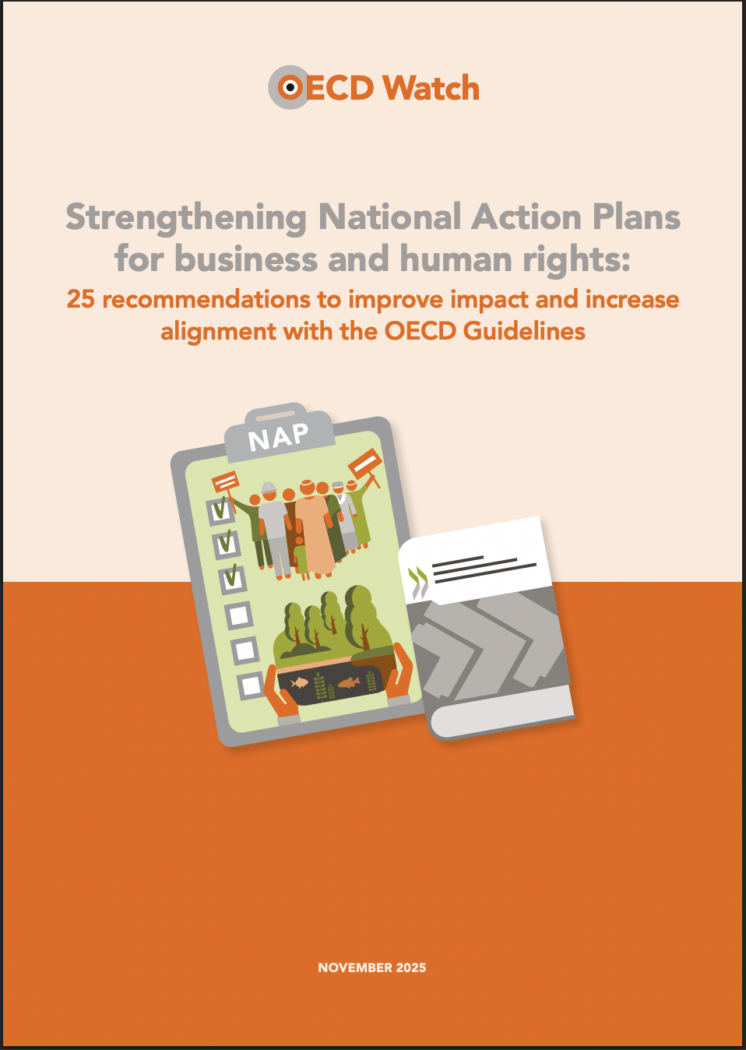
Strengthening National Action Plans on business and human rights:
OECD Watch delegation in Paris: advocacy highlights
Reporting back from a busy week at the OECD! Last week a delegation of OECD Watch CSO members and partners joined three meetings at the OECD Headquarters in Paris – of the OECD Inclusive Platform…
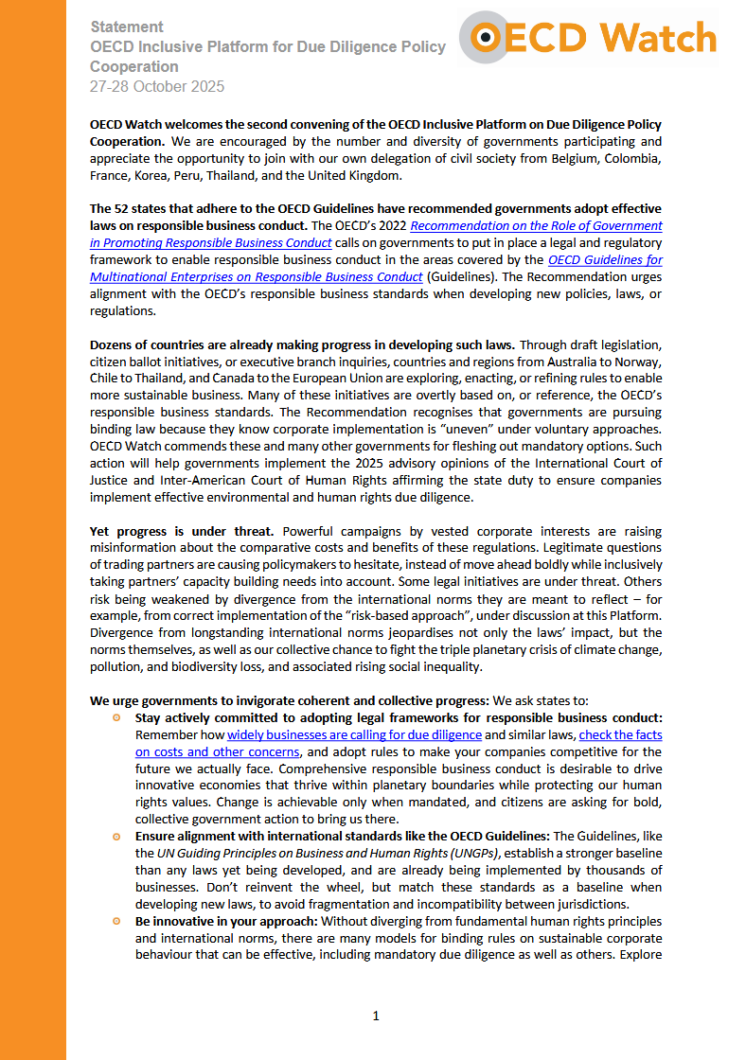
OECD Watch statement on promoting binding corporate accountability law
Using the OECD Recommendation on the Role of Government in Promoting RBC
Did you miss it? Whether you’re working on mandatory due diligence law, development finance sustainability standards, procurement, export credits, community engagement, or other corporate accountability issues, the OECD’s Recommendation on the Role of Government in…