
OECD Watch Logo
  • Complaints
    • Stage one: Deciding whether to file
    • Stage two: Preparing and filing the complaint
    • Stage three: Coordination between NCPs
    • Stage four: Initial assessment
    • Stage five: Mediation
    • Stage six: Final statement
    • Stage seven: Follow-up
    • Other filing considerations
      • 2011 or 2023 Guidelines
      • Transparency and campaigning
      • Company responsibility for harm
      • NCP parallel proceedings
    • Filing tools & resources
  • Complaints database
  • OECD & NCPs
    • About the OECD
      • OECD Accession
    • The OECD Guidelines
      • What’s in the Guidelines?
      • OECD Guidelines update
    • National Contact Points (NCPs)
      • List of NCPs
      • Due diligence
    • NCP Evaluations
      • NCP Evaluations
      • NCP Evaluations Methodology
      • NCP Evaluations Outcomes and Analysis
    • Advisory Groups
  • News & publications
    • Subscribe to newsletter
  • About us
    • Our work
      • Research & analysis
      • Policy & advocacy
      • Training & capacity building
      • Remedy campaign
      • Brazil’s Accession
    • Mission, vision & values
    • Team
      • Coordination Committee
    • Members
    • Become a member
    • Donations
    • Contact
Filter content type
Topics
  • Strategy review
  • NCPs
  • Due diligence
  • NCP Peer Review
  • CSDDD & Guidelines Alignment
  • 2023 Update of the OECD Guidelines
Home News Page 3

News / 16th November 2023

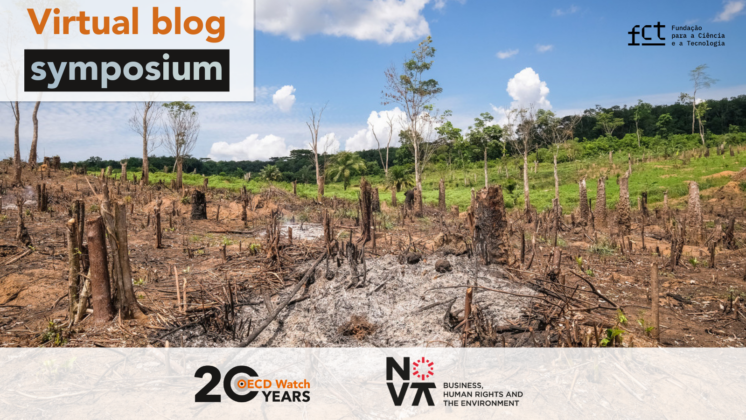
The updated OECD Guidelines and animal welfare: From recognition to reality 

By Michelle Baxter Wickham, Katie Arth, and Sophie Aylmer  Blog symposium co-organised by OECD Watch and NOVA School of Law   Earlier this year, the updated OECD Guidelines for Multinational Enterprises on Responsible Business Conduct…
News / 14th November 2023

A timely development the EU can learn from: The climate change dimension of the 2023 OECD Guidelines

By Chiara Macchi Blog symposium co-organised by OECD Watch and NOVA School of Law   The 2023 edition of the OECD Guidelines for Multinational Enterprises on Responsible Business Conduct mark a significant step forward in…

News / 9th November 2023

A (Slight) Raise of the Bar: Due Diligence in the 2023 Update of the OECD Guidelines for Multinational Enterprises on Responsible Business Conduct

By Leonard Feld Blog symposium co-organised by OECD Watch and NOVA School of Law More than a decade after the UN Guiding Principles on Business and Human Rights (UNGPs) introduced human rights due diligence (HRDD),…

News / 7th November 2023

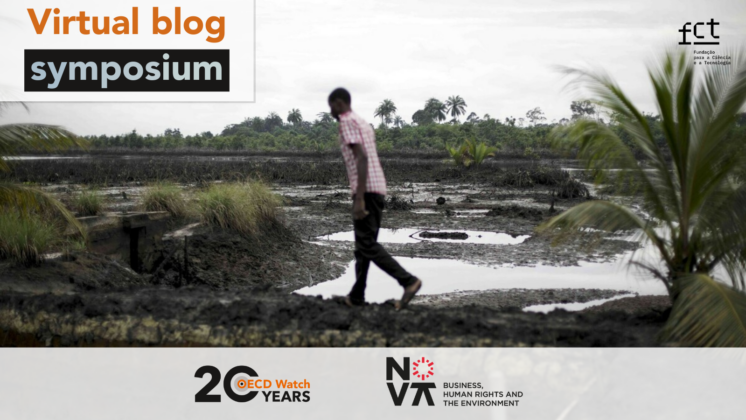
Time for a new approach: Reflections from Africa on the 2023 OECD Guidelines targeted update

By Jonathan Kaufman Blog symposium co-organised by OECD Watch and NOVA School of Law   Every rainy season for almost 50 years, Aggah Community in Rivers State, Nigeria, has faced a devastating reality: the natural…

News / 2nd November 2023

Missed opportunities in the OECD Guidelines tech-related updates

By Shreeja Sen Blog symposium co-organised by OECD Watch and NOVA School of Law   Increasing digitalisation has spawned a system-wide disruption resulting in a reorganisation of production on a global to local scale. This…

News / 31st October 2023

Putting commitment to action for real changes on the ground: Implementing the OECD Guidelines for Multinational Enterprises on Responsible Business Conduct relating to Indigenous Peoples

By Joan Carling Blog symposium co-organised by OECD Watch and NOVA School of Law   Indigenous Peoples across the globe have raised numerous complaints on the systemic violations of our rights by business operations of…

News / 26th October 2023

The OECD Guidelines for Multinationals and the Escazú Agreement: Enhancing protection to human rights defenders

By Danielle Anne Pamplona Blog symposium co-organised by OECD Watch and NOVA School of Law The OECD Guidelines for Multinationals have just been revised and the new text has been received with curiosity and expectation….

News / 24th October 2023

Meaningful Stakeholder Engagement 2.0.?: Tracing Developments in the Revised 2023 OECD Guidelines for Multinational Enterprises

By Caroline Omari Lichuma Blog symposium co-organised by OECD Watch and NOVA School of Law 12 years since the entry into force of the 2011 OECD Guidelines for Multinational Enterprises, (the 2011 Guidelines), a much-anticipated…

News / 19th October 2023

Using the OECD Guidelines for change: OECD Watch workshop series

Let’s unpack the updated OECD Guidelines! In June the OECD released significantly updated text for the OECD Guidelines for Multinationals Enterprises on Responsible Business Conduct. Throughout the month of November, OECD Watch will be hosting…

News / 19th October 2023

Three keys the EU CSDDD can take from the revised OECD Guidelines to unlock the potential of effective due diligence legislation

By Joseph Wilde-Ramsing Blog symposium co-organised by OECD Watch and NOVA School of Law Deadlock on several key issues appears to be on the horizon in the tripartite negotiations, known as ‘trialogues’, currently being undertaken…

OECD Watch Logo

Contact us

Email: [email protected]
Visit our twitter page Visit our facebook page
  • Disclaimer
  • Privacy statement
  • Cookie Policy
Cookies & Privacy
We use cookies to optimise your experience and improve our website.
Functional Always active
These cookies are required in order to use the website. They ensure that the website works properly and that your user preferences remain known. For example, they save you from having to enter the same information every time you visit our website. We may set these cookies without your consent.
Preferences
The technical storage or access is necessary for the legitimate purpose of storing preferences that are not requested by the subscriber or user.
Statistics
The technical storage or access that is used exclusively for statistical purposes. The technical storage or access that is used exclusively for anonymous statistical purposes. Without a subpoena, voluntary compliance on the part of your Internet Service Provider, or additional records from a third party, information stored or retrieved for this purpose alone cannot usually be used to identify you.
Marketing
These cookies track your online activity to help advertisers deliver more relevant advertising or to limit how many times you see an ad. Marketing cookies may share that information with other websites, organisations or advertisers.
  • Manage options
  • Manage services
  • Manage {vendor_count} vendors
  • Read more about these purposes
Preferences
  • {title}
  • {title}
  • {title}