Recommendations for the OECD and member governments on the future implementation of the Guidelines
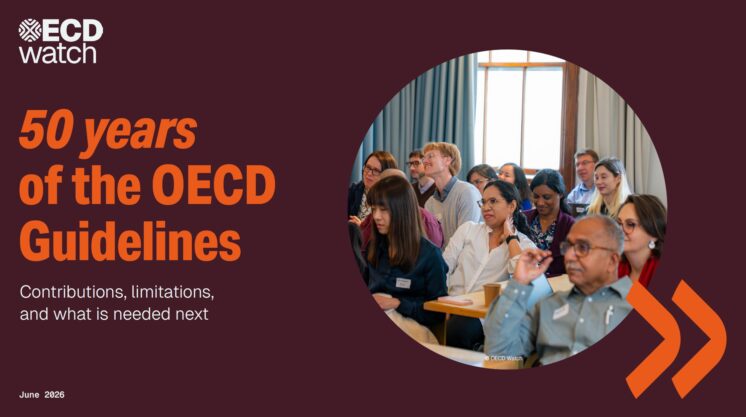
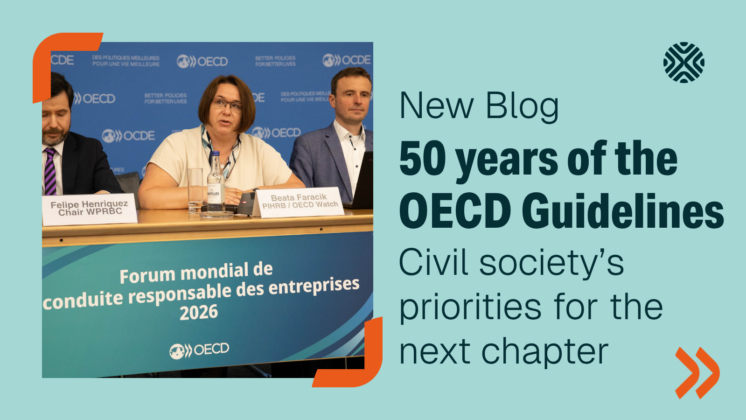
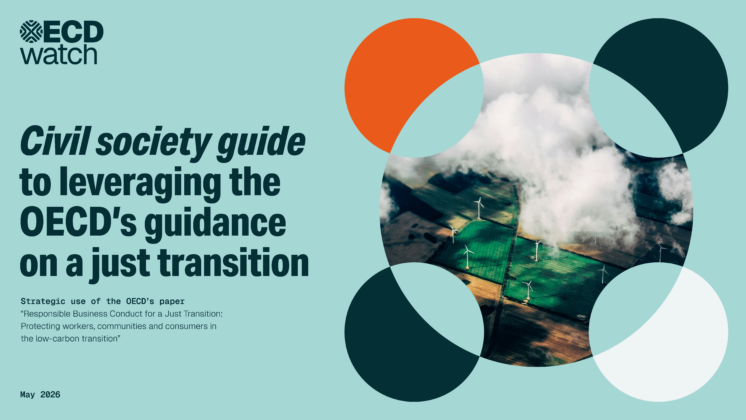
This year marks the 50th anniversary of the Guidelines. To mark this occasion, OECD Watch has published a report outlining the contributions of the Guidelines, examining the challenges that responsible business conduct (RBC) faces, and setting expectations for the future.
In 1976, the OECD Guidelines for Multinational Enterprises on Responsible Business Conduct were adopted. Over five decades, they have guided RBC and steadily expanded the scope of issues for which companies may be held accountable. Most recently updated in 2023, the Guidelines outline expectations for businesses on how they should sustainably and responsibly handle their business operations and prevent, mitigate, and remediate harm across their value chains. The Guidelines’ National Contact Point (NCP) complaint mechanism has provided an important, if imperfect, non-judicial pathway to remedy.
Yet, one critical shortcoming has limited the Guidelines’ real-world impact: their non-binding nature. Voluntariness has allowed companies to disregard the Guidelines’ standards in their activities and disengage from NCP processes without consequence. It is clear that voluntary standards alone are not enough – binding rules, enacted and enforced by governments, are essential to ensuring a sustainable economic model and delivering a just transition to an inclusive, equitable, and green future.
This report highlights the role civil society has played in advancing responsible business standards and provides targeted recommendations to the OECD and individual member states. It outlines four defining challenges of our time that are explored through the OECD’s RBC framework, which are:
- Responding to climate change and ensuring a just transition,
- Responsibly managing the digital and AI transition,
- Financing sustainably, and
- Ensuring meaningful stakeholder engagement and access to remedy.
The report also offers recommendations to civil society on how to use the Guidelines as a critical tool moving forward. With this report, OECD Watch intends to support civil society, governments, and the OECD in achieving concrete improvements in the implementation of the Guidelines in the upcoming years.
read more less