
OECD Watch Logo
  • Complaints
    • Stage one: Deciding whether to file
    • Stage two: Preparing and filing the complaint
    • Stage three: Coordination between NCPs
    • Stage four: Initial assessment
    • Stage five: Mediation
    • Stage six: Final statement
    • Stage seven: Follow-up
    • Other filing considerations
      • 2011 or 2023 Guidelines
      • Transparency and campaigning
      • Company responsibility for harm
      • NCP parallel proceedings
    • Filing tools & resources
  • Complaints database
  • OECD & NCPs
    • About the OECD
      • OECD Accession
    • The OECD Guidelines
      • What’s in the Guidelines?
      • OECD Guidelines update
    • National Contact Points (NCPs)
      • List of NCPs
      • Due diligence
    • NCP Evaluations
      • NCP Evaluations
      • NCP Evaluations Methodology
      • NCP Evaluations Outcomes and Analysis
    • Advisory Groups
  • News & publications
    • Subscribe to newsletter
  • About us
    • Our work
      • Research & analysis
      • Policy & advocacy
      • Training & capacity building
      • Remedy campaign
      • Brazil’s Accession
    • Mission, vision & values
    • Team
      • Coordination Committee
    • Members
    • Become a member
    • Donations
    • Contact
Filter content type
Topics
  • Strategy review
  • NCPs
  • Due diligence
  • NCP Peer Review
  • CSDDD & Guidelines Alignment
  • 2023 Update of the OECD Guidelines
Home News Page 10

OECD Guidelines and Complaints now available in Arabic and Burmese
News / 15th February 2016

OECD Watch brochure on OECD Guidelines now available in Arabic and Burmese

The OECD Watch brochure provides a brief overview of the content of the OECD Guidelines for Multinational Enterprises and the associated complaint mechanism. The brochure was already available in seven languages and has now also…
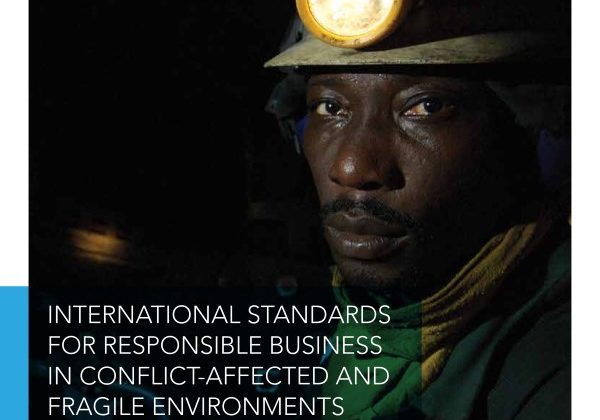
OECD Guidelines apply to responsible business in conflict settings
News / 23rd November 2015

OECD Guidelines apply to responsible business in conflict settings

On 5 November, the International Dialogue on Peacebuilding and Statebuilding officially launched its brochure ‘International Standards for Responsible Business in Conflict-Affected and Fragile Environments’. This brochure provides a concise overview of some of the key…

OECD watchdog calls for reform of failing complaint system
News / 15th June 2015

OECD watchdog calls for reform of failing complaint system

Allegations of corporate wrongdoing lodged under the OECD Guidelines for Multinational Enterprises over the past 15 years almost never resulted in companies being held accountable, OECD Watch’s new analysis of cases has found. Remedy Remains…

Front page of publication
News / 14th June 2015

New Quarterly Case Update June 2015 available

The June 2015 update of new cases filed, pending and recently concluded or rejected cases, and current case statistics is now available. The highlights of this Quarterly Case Update include 5 new cases filed against…

OECD Watch public seminar in Cambodia, 8 May 2015
News / 15th April 2015

OECD Watch public seminar in Cambodia, 8 May 2015

OECD Watch and Equitable Cambodia are pleased to invite you to the public seminar Promoting Responsible Corporate Conduct in the Greater Mekong region: Using the OECD Guidelines for Multinational Enterprises as a tool for corporate…

News / 23rd February 2015

The Norwegian Government is getting rid of a critical NCP voice

Norwegian civil society organisations are disappointed that the Norwegian government decided not to renew Professor Hans Petter Graver’s mandate as head of the Norwegian National Contact Point (NCP) for the OECD Guidelines. Norwegian civil society…

News / 2nd September 2014

OECD Watch brochure on OECD Guidelines now available in Portuguese

The OECD Watch brochure provides a brief overview of the content of the OECD Guidelines for Multinational Enterprises and the associated complaint mechanism. The brochure was already available in six languages and has now also…

The Dutch NCP finds that Shell bases statements on oil spills on flawed investigation
News / 19th June 2013

The Dutch NCP finds that Shell bases statements on oil spills on flawed investigation

The Dutch NCP issued a final statement in the OECD Guidelines complaint against Shells in which it finds that Shell’s statements on the oil spills were based on flawed investigations and disputed evidence. The NCP…

News / 14th June 2013

New OECD Watch guide to the OECD Guidelines

OECD Watch publishes its new OECD Watch Guide to the Guidelines which is designed to help individuals, communities, NGOs and trade unions that have been negatively affected by corporate behaviour to address the alleged misconduct…

News / 5th October 2012

OECD Watch welcomes Denmark’s strengthened NCP: the New Mediation and Complaints Mechanism, with a mandate to investigate allegations and make recommendations

In June 2012 the Danish Parliament passed legislation with the objective of creating a new mediation and complaints institution for responsible business behavior in Denmark. This new body will replace the old and much criticized…

OECD Watch Logo

Contact us

Email: [email protected]
Visit our twitter page Visit our facebook page
  • Disclaimer
  • Privacy statement
  • Cookie Policy
Cookies & Privacy
We use cookies to optimise your experience and improve our website.
Functional Always active
These cookies are required in order to use the website. They ensure that the website works properly and that your user preferences remain known. For example, they save you from having to enter the same information every time you visit our website. We may set these cookies without your consent.
Preferences
The technical storage or access is necessary for the legitimate purpose of storing preferences that are not requested by the subscriber or user.
Statistics
The technical storage or access that is used exclusively for statistical purposes. The technical storage or access that is used exclusively for anonymous statistical purposes. Without a subpoena, voluntary compliance on the part of your Internet Service Provider, or additional records from a third party, information stored or retrieved for this purpose alone cannot usually be used to identify you.
Marketing
These cookies track your online activity to help advertisers deliver more relevant advertising or to limit how many times you see an ad. Marketing cookies may share that information with other websites, organisations or advertisers.
  • Manage options
  • Manage services
  • Manage {vendor_count} vendors
  • Read more about these purposes
Preferences
  • {title}
  • {title}
  • {title}